
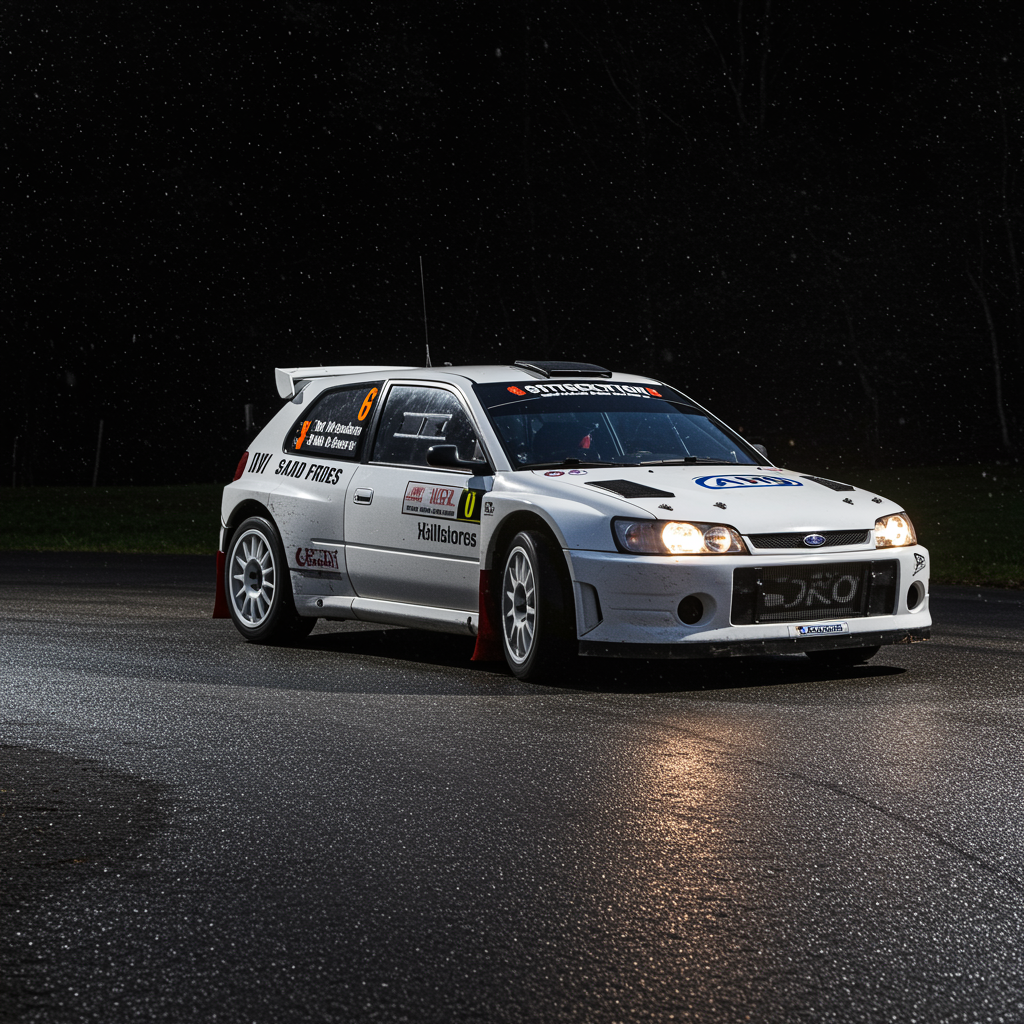
People constantly ask exactly what is a rally car when they see these machines launching over massive dirt jumps in the forest. You can define these vehicles as heavily modified production cars built to race against the clock on closed public roads. Drivers navigate unpredictable terrain like gravel, snow, mud, and broken tarmac at terrifying speeds.
Understanding the engineering behind these vehicles provides an excellent lesson in structural physics. Students and racing fans marvel at how these machines survive punishing impacts while maintaining incredible speed. Every component serves a specific purpose to keep the vehicle moving through the harshest environments on earth.
The Bare Metal Foundation
Engineers start with a standard street car chassis direct from the factory assembly line. Mechanics strip the vehicle completely bare until only the steel shell remains. They remove every ounce of sound deadening material and heavy factory carpeting to reduce overall weight.
Next, professional welders spend hundreds of hours adding extra metal to the factory seams. This extensive seam welding process prevents the chassis from twisting apart during brutal jumps. The stiffer frame allows the suspension components to work with absolute precision.
The Steel Survival Cell
Rallying remains one of the most dangerous forms of motorsport on the planet. Trees and cliffs line the edges of the racing surface with zero protective walls or run-off areas. Engineers build a massive steel roll cage that forms an indestructible survival cell around the crew.
This cage ties directly into the suspension mounting points to create a highly rigid structure. It prevents the roof from crushing the driver during a violent high-speed rollover. The thick steel tubes also protect the crew from severe side impacts against trees or rocks.
Advanced Suspension Dynamics
The suspension system on a modern machine costs more than most luxury sports cars. Teams use advanced shock absorbers with massive external fluid reservoirs to handle continuous high-speed impacts. Drivers can adjust the compression and rebound settings for every single stage of the race.
A tarmac setup keeps the car extremely low to the ground for maximum aerodynamic grip and cornering speed. A gravel setup raises the vehicle significantly to clear massive rocks and deep ruts. Long suspension travel allows the tires to maintain contact with the ground over extreme bumps.
To finish first, you must first finish the race.
Powertrain And Extreme Turbocharging
Regulations restrict the engine capacity, so engineers rely heavily on enormous turbochargers to generate power. These power plants produce massive amounts of torque to pull the car out of deep mud and tight corners. Mechanics use forged internal components to handle the extreme heat and pressure of forced induction.
The famous popping sounds you hear come from a highly specialized anti-lag system. This system dumps raw fuel directly into the hot exhaust manifold when the driver lifts off the throttle. The resulting explosion keeps the turbocharger spinning at maximum speed for instant power delivery.
Drivetrain And Power Delivery
Transferring hundreds of horsepower to loose dirt requires mechanical genius. Most top-tier vehicles use highly complex all-wheel-drive systems with mechanical front and rear differentials. Active center differentials use hydraulic pressure to split torque between the front and rear axles dynamically.
Drivers shift through the gears using a tall sequential lever mounted right next to the steering wheel. This system allows them to change gears in milliseconds without ever using the clutch pedal. They keep both hands near the wheel to handle sudden steering corrections over rough terrain.
Braking Systems For Dirt Roads
Engineers face massive challenges when designing brakes for shifting surfaces. Standard anti-lock braking systems actually increase stopping distances on loose gravel or snow. Drivers want the wheels to lock up entirely so the tires can dig through the loose topsoil and find hard dirt underneath.
Teams install smaller brake rotors for gravel events to fit thick tires over the wheels. Tarmac events allow teams to run massive carbon-metallic rotors that fill the entire inside of the wheel barrel. Mechanics also install a hydraulic handbrake lever to help the driver slide the rear end around tight hairpin turns.
The Importance Of Aerodynamics
You might think aerodynamics matter less on dirt roads than on smooth paved circuits. Modern engineering proves that downforce plays a massive role even on loose gravel. Giant rear wings push the back tires deep into the dirt to generate forward traction.
Front splitters guide air smoothly underneath the flat underbelly of the vehicle. Heavy composite guards protect this flat floor from sharp rocks and aggressive impacts. Cooling ducts force high-pressure air directly onto the glowing hot brake calipers to prevent total system failure.
Tire Selection Strategy
Tire strategy often decides who wins the entire weekend. Teams must guess the weather conditions miles up the mountain before leaving the service park. Running the wrong rubber compound on a frozen road usually ends in a massive crash.
Mechanics cut custom grooves into the rubber to match the specific mud conditions of a stage. They use specialized heating blankets to bring tarmac tires up to optimal operating temperature before the start line.
| Surface Type | Tire Characteristics | Primary Function |
| Dry Tarmac | Smooth rubber with minimal grooves | Maximum grip and high cornering speed |
| Loose Gravel | Deep tread blocks and thick sidewalls | Digging through loose dirt and preventing punctures |
| Deep Snow | Very narrow profile with metal studs | Piercing through ice to find solid traction |
The Navigator And Pacenotes
A pilot cannot survive a stage without their partner sitting in the right seat. The co-driver reads extremely detailed pace notes from a specialized notebook while experiencing massive physical forces. These instructions describe the severity of every corner, jump, and hazard on the road ahead.
The driver listens to these notes through an intercom system built directly into their helmet. They steer the car blindly over blind crests based entirely on the trust they place in the co-driver. This teamwork represents the most critical human element in the entire sport.
- Distance calls: Tell the driver exactly how many meters until the next obstacle.
- Corner numbers: Grade the sharpness of a turn from one to six.
- Caution warnings: Alert the driver to hidden rocks, ice patches, or massive cliffs.
Why Engineering Students Analyze This Sport
Mechanical engineering students analyze rally damage to understand material fatigue and stress limits. You can learn incredible lessons about kinetic energy transfer by watching a chassis absorb a massive jump. This motorsport forces engineers to invent highly creative solutions for entirely unpredictable environments.
Teams use advanced telemetry to record suspension travel and wheel speed during every single run. This data logging helps students bridge the gap between classroom physics and practical mechanics. Analyzing failed suspension arms teaches valuable lessons about metal durability under extreme duress.
Our Educational Mission
Speed Circuit functions solely as an educational hub for motorsport fans and automotive students. We do not sell parts and we maintain zero commercial objectives. Our platform exists purely to share technical knowledge and explain the complex engineering behind the cars we love.