
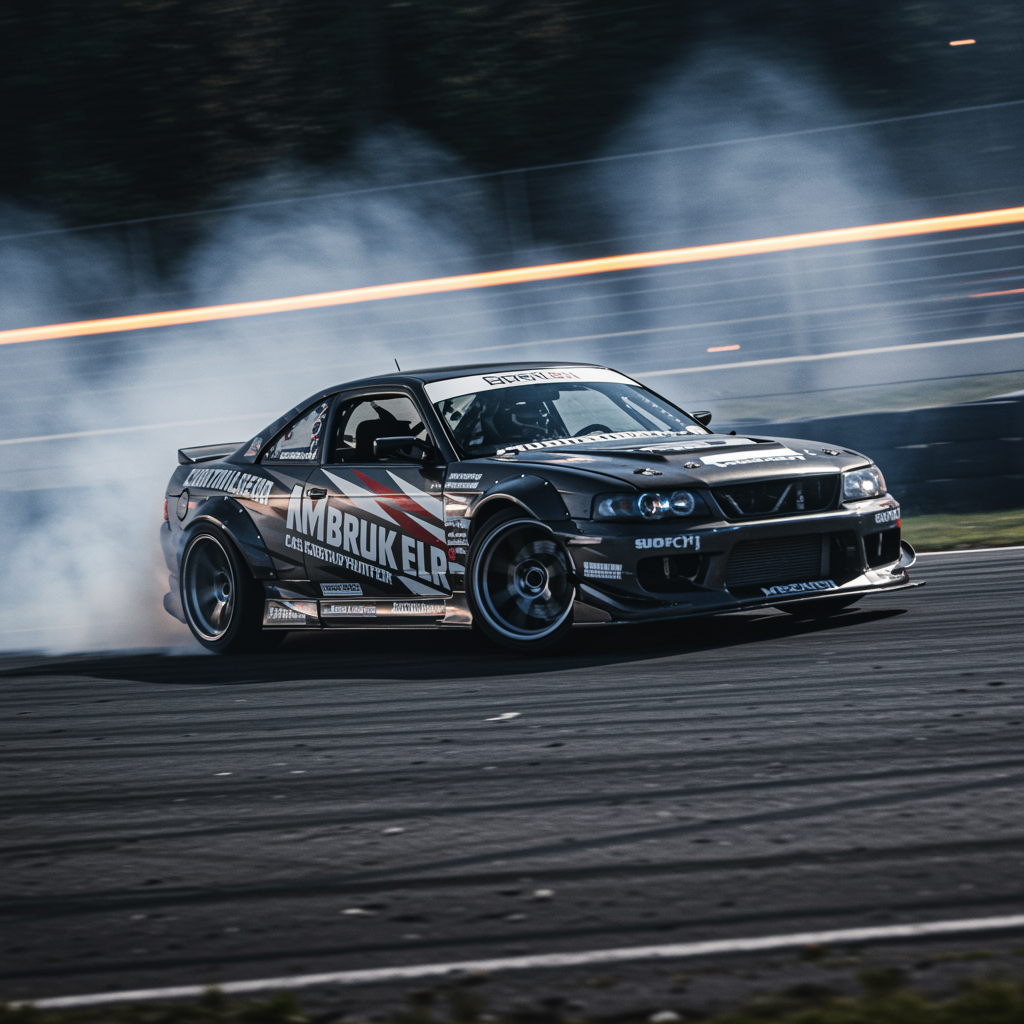
People often ask exactly what is a drift car when they see these vehicles sliding sideways across a track in a massive cloud of smoke. You can define this machine as a heavily modified rear-wheel-drive vehicle built specifically to maintain controlled oversteer. Drivers intentionally break traction in the rear wheels while steering in the opposite direction to navigate corners at high speeds.
Understanding these vehicles requires a basic knowledge of automotive physics and mechanical engineering. Students and racing fans can learn a lot by analyzing the unique setup these machines require. Every component works together to keep the vehicle balanced during extreme lateral movement.
The Core Philosophy Of Sliding
Standard cars grip the road to turn corners efficiently and safely. A drift build does the exact opposite by sacrificing rear grip to initiate a slide. The driver uses throttle input and steering angle to control the angle and speed of the slide.
This balancing act demands perfect synchronization between human reflexes and mechanical parts. You cannot simply take a regular commuter car to a track and expect it to perform this way. Builders change the entire geometry of the vehicle to make it predictable during a loss of traction.
The secret to drifting lies in controlling a machine that wants to spin completely out of control.
Engine Power And Torque Delivery
You need significant power to break traction and keep the rear wheels spinning through a long corner. Builders typically prefer engines that deliver immediate torque rather than high top-end speed. Turbocharged engines remain very popular because they provide massive power bursts when the driver hits the throttle.
Cooling systems require major upgrades because these engines run at high revolutions with very little forward airflow. Mechanics install massive aluminum radiators and high-performance electric fans. Many cars also feature oil coolers and power steering coolers to prevent extreme heat failure.
Essential Drivetrain Modifications
The engine power means nothing if you cannot transfer it to the ground properly. The transmission and differential endure brutal punishment during a typical track day.
The Heavy Duty Clutch
Drivers abuse the clutch pedal constantly to shock the drivetrain and break the tires loose. A standard organic clutch would burn out in just a few minutes of track time. Mechanics install multi-plate ceramic clutches that handle extreme heat and aggressive engagements.
Manual Transmissions
You rarely see automatic transmissions in this sport. Drivers need total control over their gear selection and engine revolutions. A manual gearbox allows the driver to kick the clutch pedal and send a sudden surge of power to the rear axle.
The Rear Differential
This component represents the most critical modification for any beginner. A standard open differential sends power to the wheel with the least resistance. This setup makes controlled sliding completely impossible.
Drivers solve this problem by welding the internal gears of the differential together. This locked setup forces both rear wheels to spin at the exact same speed at all times. Professional teams use expensive two-way limited-slip differentials for better precision.
Steering Angle And Front Suspension
The front wheels dictate where the car goes while the rear wheels spin. When the rear of the car swings to the right, the driver must steer sharply to the left. A standard steering rack simply does not offer enough angle to save the car from spinning out.
Engineers design custom steering angle kits that replace the factory suspension arms. These kits allow the front wheels to turn at nearly ninety degrees. This extreme angle lets the driver maintain massive drift angles without losing forward momentum.
Coilovers And Ride Height
The suspension must handle rapid weight transitions when the car switches direction. Builders install fully adjustable coilovers to stiffen the chassis. Drivers lower the ride height to drop the center of gravity and reduce body roll.
Alignment Settings
Mechanics dial in negative camber on the front wheels. This setting angles the top of the tires inward toward the engine bay. It ensures the front tires maintain a flat contact patch with the road when the steering wheel turns to full lock.
The Role Of Tires In The Sport
Tires function as the most expensive consumable item in this entire motorsport. A professional driver can destroy a brand new set of rear tires in just two laps. Teams bring dozens of spare wheels to every single event.
The front tires must provide absolute grip to pull the car through the corner. Drivers run sticky performance tires running at lower air pressures in the front. The rear tires feature harder rubber compounds and higher air pressures to reduce grip and create smoke.
| Feature | Front Tires | Rear Tires |
| Primary Goal | Maximum steering grip | Predictable loss of traction |
| Rubber Compound | Soft and sticky | Hard and durable |
| Air Pressure | Low pressure | High pressure |
Important Driving Techniques
Owning the right machine only solves half the puzzle. The driver must execute specific physical techniques to force the car sideways. Students studying physics can easily calculate the forces involved in these maneuvers.
- The Clutch Kick: The driver depresses the clutch and revs the engine before dropping the pedal to shock the rear tires.
- The Handbrake Pull: The driver pulls a hydraulic handbrake to lock the rear wheels instantly and initiate a slide.
- The Scandinavian Flick: The driver steers away from the corner before snapping back toward the apex to throw the weight of the car sideways.
- Weight Shifting: The driver lifts off the throttle abruptly to shift the vehicle mass to the front tires before steering hard.
Interior Safety And Controls
The interior of a purpose-built track car looks nothing like a luxury sedan. Builders strip out carpets, sound deadening, and heavy seats to reduce overall weight. Every remaining component focuses strictly on safety and car control.
The Roll Cage
Steel tubing forms a protective shell around the driver compartment. This cage prevents the roof from crushing the driver during a rollover accident. It also stiffens the entire chassis significantly.
Fixed Bucket Seats
Drivers experience violent lateral forces during transitions. Standard seats allow the driver to slide around the cabin. Rigid bucket seats combined with five-point racing harnesses strap the driver firmly in place.
The Hydraulic Handbrake
A standard cable handbrake lacks the power to lock rear tires spinning at high speeds. Mechanics install a tall hydraulic lever next to the steering wheel. This lever connects directly to a secondary set of brake calipers on the rear wheels.
Popular Chassis Choices For Beginners
Certain cars dominate the tracks because they offer a perfect starting platform. These vehicles feature front-engine layouts and rear-wheel drive. They also benefit from massive aftermarket parts support.
The Nissan S-chassis remains the most iconic platform in the history of the sport. The BMW E36 chassis provides an affordable alternative with excellent factory balance. Many new drivers also choose the Mazda Miata because it teaches excellent car control at lower speeds.
Why Engineering Students Analyze This Sport
You can view a drifting vehicle as a massive physics experiment in motion. The sport demonstrates principles of kinetic friction, momentum, and weight transfer in real time. Engineering students study these cars to understand how extreme forces act upon metal components.
Teams use advanced telemetry to record suspension travel and wheel speed during a run. This data logging helps students bridge the gap between textbook theories and practical mechanics. Analyzing failed parts teaches valuable lessons about material stress limits and fatigue.
Speed Circuit operates purely as an educational platform. We do not sell parts or promote any commercial racing services. Our goal remains to provide accurate technical information for automotive students and racing enthusiasts.